Understanding and Approaching Scriptural Poetry: Exploring Protestant Latin verse c. 1550-1620 and its Parallels

This two-day symposium Tuesday 27th-Wednesday 28th June at University College London will be dedicated to exploring the wealth of influential Protestant Latin verse, focusing particularly on the early period of c. 1550-1620. Proposals for short papers and presentations on this topic are welcome.

Barbara Lewalski’s work on Protestant poetics and the English lyric shaped a field of study in English literature, and set out the particular significance of scripture to Protestant vernacular poetry. In common with most subsequent studies in this field, however, Lewalski’s book does not consider the wealth of Latin poetry of the period. More generally, despite the acknowledged importance of scripture to poetry of this period, the relationship between scripture, religious practice more generally (including liturgy and knowledge of scriptural languages) and poetry remains a relatively neglected and “unfashionable” aspect of early modern poetics. This aspect of early modern literature is often perceived as particularly alien, obscure or “difficult” to teach or to expound accessibly in criticism.

This event will bring together scholars with a particular interest in Protestant Latin poetry to discuss this neglected literature. In addition, the event will explore relevant parallels which may help us to understand this poetry, including vernacular scriptural poetry of any period (including today) and any faith tradition; religious or scriptural poetry written in conversation with a scriptural language; and religious or scriptural poetry produced in any ‘international’ language. The event will include a panel discussion with poets writing scriptural verse in English today, and the reading of some newly-commissioned poems.

At this point I would like to invite proposals for papers of around 30 minutes. Possible topics might include:

  • the work of an individual early Latin Protestant poet, or the study of a collection of such poetry, whether in print or manuscript
  • the role of scriptural paraphrase
  • the role of translation and the study of scriptural languages
  • the relationship between Latin and vernacular poetry of this type
  • papers exploring parallels in other languages and periods, and/or relating to other faith traditions and scriptural or liturgical language, including modern and contemporary examples

If you are interested in presenting at this symposium, please send a title, 500 word abstract and a summary of your wider research, teaching or literary interests (as relevant) to Dr Victoria Moul (v.moul@ucl.ac.uk) by the 15th  May 2023.

The event will be informal in tone and collaborative in nature, with relatively few presentations and plenty of time for discussion. Those participating will be expected to pre-circulate their paper to facilitate discussion, and (whether speaking themselves or not) to be ready to engage with a variety of approaches and perspectives.

Travel and overnight accommodation costs (within limits) will be reimbursed for confirmed speakers who do not have access to institutional funds for these expenses. In addition, three modest travel bursaries are available for early career scholars (graduate students or recent graduate students) who wish to participate in the symposium, even if they do not apply to present. If you are an early career scholar who does not wish to present, but you are interested in attending the symposium and would like to be considered for a travel bursary, please email Dr Moul giving an outline of your research and how attendance would contribute to it.

Developed versions of some or all of the presentations may be published in due course in an edited volume, combining scholarly and creative responses to the topic.

This event is supported by the British Academy, as part of a Mid-Career Fellowship.
Download the CfP here.

The LiLa: Linking Latin team invites you to participate to the LiLa Project Closing Event, consisting in a workshop taking place at the Università Cattolica del Sacro Cuore in Milan, Italy, on 25th-26th of May, 2023. More information about the workshop, including a detailed programme, can be found at: https://lila-erc.eu/events-2/lila-closing-event/.

LiLa responds to the growing need in the fields of Computational Linguistics, Humanities Computing and Classics to create an interoperable Knowledge Base of linguistic resources and NLP tools for Latin. To this end, LiLa makes use of Linked Open Data (LOD) practices and standards to connect words to textual and lexical resources currently distributed across the web.

The purpose of this workshop is to present the results of five years of work on the LiLa project and to bring together scholars responsible for the creation and development of linguistic resources and NLP tools for Latin that have been linked and integrated in the LiLa Knowledge Base.

The workshop is open to all and is free of charge, but registration is required. Please register here: https://forms.gle/VLNkjxXFykDivFAm8.

The official language of the workshop is English. The event will be live-streamed and video-recorded. Registration for in-person participation will close on May 5th. Registration for online participation is always possible.

The Seminarium Philologiae Humanisticae invites Neo-Latinists to send in contributions for the new IJsewijn Lecture & Laboratorium. This initiative revives the annual IJsewijn Lecture in a novel format, but preserving some classical ingredients.

You should register by 12 May, either for the 15th IJsewijn Lecture (free), or for the 1st IJsewijn Laboratorium (€25), or for both, via: https://www.arts.kuleuven.be/formulieren/inschrijven/view. For more details and the preliminary program, please see below or consult our webpage: https://www.arts.kuleuven.be/sph/ijsewijnlab.

The 15th IJsewijn Lecture will take place on Thursday 25 May 2023, at 5pm, in the Justus Lipsius Room of the Erasmushuis (8th floor; Blijde Inkomststraat 21, 3000 Leuven). The lecture will be delivered by Ingrid De Smet (University of Warwick & Visiting Professor at the I Tatti Harvard Center for Italian Renaissance Studies, April-June 2023), and is provisionally entitled

Eco-Latin?
Water Management for Food and Recreation in Selected Neo-Latin Texts

The lecture will be followed by a reception at 6pm in the big hall of the Erasmushuis on the ground floor. Attendance is completely free, but registration will be required.

The next day, on Friday 26 May 2023, the very first IJsewijn Laboratorium will be held at the Couvreurzaal (M01.E50; Edward Van Evenstraat 4, 3000 Leuven, on the Social Sciences Campus, where IANLS 2022 also took place). The Laboratorium will have a full-day program devoted to ongoing Neo-Latin research, and has two main aims: (1) showcasing state-of-the-art research in Neo-Latin studies, in terms of both subject and methodology, and (2) bringing together young scholars with established researchers, including the IJsewijn Lecturer. There is, in other words, no specific thematic focus, and everyone is encouraged to present work-in-progress, paying due attention to both successes and pitfalls in Neo-Latin research, and how to build on, or deal with, them.

The Laboratorium aims to create an active exchange among the participants, in order to address and discuss promising research perspectives. All sessions will be plenary, including a research pitch by local Neo-Latin students. Each session will last one hour and include two presentations of 15’ each, followed by 30’ discussion time. Presenters will be asked to pre-circulate their materials and ideas in a way they see fit, no later than two weeks before the event (e.g. a Neo-Latin text with translation and/or commentary, a short paper summarizing the main points of their work-in-progress, an advanced paper not yet submitted for publication, a poster file, …). The pre-circulated materials will be shared only with those registered for the workshop and will serve to encourage in-depth discussions. The scientific committee will make a competitive selection of papers, in order to guarantee a high-quality exchange.

The main workshop language will be English, but we will consider proposals in other languages with a strong tradition in Neo-Latin studies. Proposals of no more than 250 words should be sent to raf.vanrooy[at]kuleuven.be before 1 February 2023 in Word and PDF format. Notifications of acceptance will be given on 15 February 2023. The registration fee for the IJsewijn Laboratorium will be €25 to cover catering. We unfortunately do not have any means to cover the travel and accommodation costs of all participants, but we will be able to provide an exception for up to four junior researchers without any means of their own (please indicate this in your proposal). A link for registration will be made available in late February.

Organizing committee:
Marijke Crab, Nicholas De Sutter, Ide François, Christian Laes, Maxim Rigaux, Raf Van Rooy

Scientific committee:
Susanna de Beer, Gianmario Cattaneo, Marijke Crab, Ingrid De Smet, Nicholas De Sutter, Ide François, Martine Furno, Han Lamers, Marc Laureys, Vasileios Pappas, Maxim Rigaux, Florian Schaffenrath, Toon Van Houdt, Raf Van Rooy

For a PDF version of this Call for Papers, click here.

Neolatinistendag 2023

in samenwerking met de Bibliotheek Rotterdam

en de OIKOS-onderzoeksgroep ‘Classical Receptions and Traditions’

vrijdag 17 maart 2023

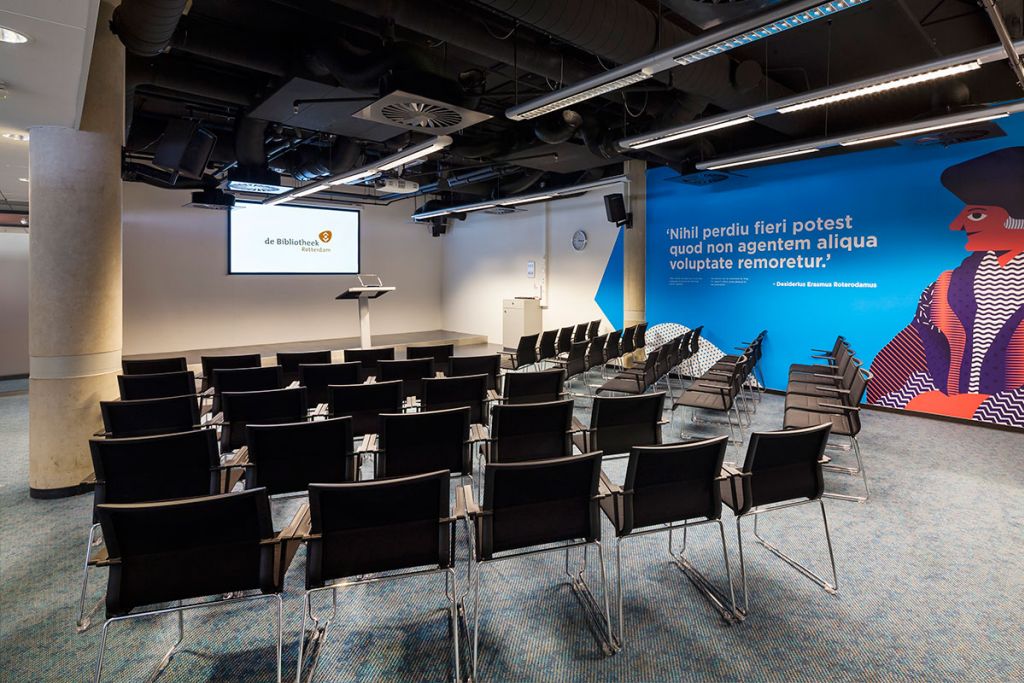
Bibliotheek Rotterdam (Desideriuszaal), Hoogstraat 110, Rotterdam

PROGRAMMA

10.30   Ontvangst met koffie en thee (aangeboden door de Bibliotheek Rotterdam)

Ochtend

11.00   Opening door Jan Bloemendal (Neolatinistenverband)

11.15    Michiel Verweij (Koninklijke Bibliotheek van België), ‘Prehumanisten in de Zuidelijke Nederlanden: een kwestie van handschriften’

11.45    Raf van Rooy (KU Leuven), ‘Tussen Neolatijn en Nieuw-Oudgrieks: Klassieke tweetaligheid bij Erasmus en Girolamo Aleandro’

12.15   Jan van Gijn (Universiteit Utrecht), ‘De geest op het droge: 16e-eeuwse medici over de hersenfunctie’

12.45   Lunch (op eigen gelegenheid in Bistrobar Binnenrotte in de bibliotheek of elders)

Doorlopende inlooppresentatie

Erasmiana uit de collectie van de Bibliotheek Rotterdam door John Tholen (conservator)

Middag

14.15   Andrea Peverelli, ‘Neo-Latin through computational methods: challenges and perspectives’

14.45    David Cohen, ‘Anthologia Barlaeana: een bundel Neolatijnse poëzie voor vierdeklassers’

15.15   Bas van Bommel, ‘Jacob Hartman (1851-1924) en de herleving van het Latijn als literaire wereldtaal’

15.45-17.00     Borrel (aangeboden door de OIKOS-onderzoeksgroep ‘Classical Receptions and Traditions’)

AANMELDEN

U bent hiervoor van harte uitgenodigd. De toegang is gratis, wel graag aanmelden vóór vrijdag 10 maart via neolatijn@gmail.com.

U kunt het programma hier downloaden als pdf.

Op 12-13 november organiseert Johanna Luggin van het ERC-project ‘Nova Scientia – Early Modern Scientific Literature and Latin’ de workshop ‘Pathos in Neo-Latin Scientific Writing’ op de Universiteit van Innsbruck. Vanwege nieuwe restricties als gevolg van de stijgende besmettingsaantallen met COVID-19 is deze workshop ook online via Zoom te volgen. Het programma vindt u hier. Neem contact op met neolatijn@gmail.com voor de Zoom-link en toegangsgegevens.

Op vrijdagmiddag 29 oktober organiseert het Centre for Digital Humanities van de Universiteit Utrecht het webinar ‘Beyond “Ctrl-F”: automating searches in large textual corpora.

‘How widespread was the use of the actors category “Respublica literaria” in the early modern period? Was it used just as frequently in the 16th as in the 18th century? Did German, French, Dutch and Spanish scholars all inscribe themselves into this community? Did they all even use the term? This is one of the questions that researchers in the ERC Consolidator project ‘Sharing Knowledge in Learned and Literary Networks – The Republic of Letters as a Pan-European Knowledge Society’ (SKILLNET) try to answer (‘Sharing Knowledge in Learned and Literary Networks – The Republic of Letters as a Pan-European Knowledge Society’). Two challenges face them: first, the complexity of the Latin term ‘respublica literaria’ which occurs in 192 variations, due to different spellings, declinations and word order. Second, the fact that the texts available for machine-reading are quite dirty. These are the problems that Liliana Melgar and Dirk van Miert will address in their presentation.’

Voor meer informatie en aanmelding zie: https://cdh.uu.nl/events/cdh-webinar-beyond-ctrl-f/.

Neolatinistendag 2021

in samenwerking met het Seminarium Philologiae Humanisticae – KU Leuven, UAntwerpen en Brepols Publishers

vrijdag 29 oktober 2021

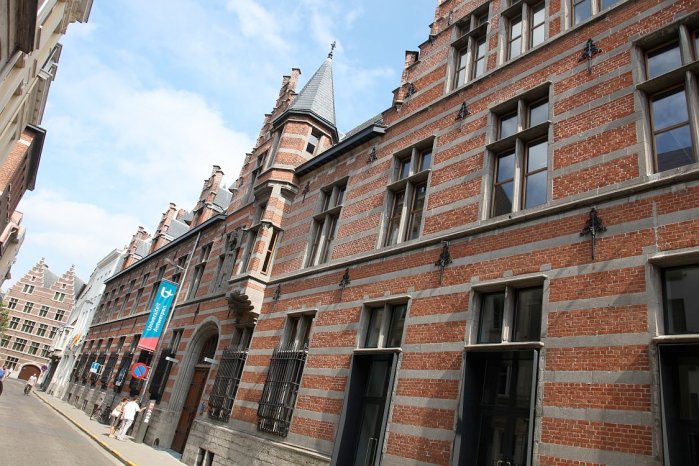
Universiteit Antwerpen, Klooster van de Grauwzusters, Lange Sint-Annastraat 7, 2000 Antwerpen

PROGRAMMA

10.30  Ontvangst met koffie en thee

11.00  Welkom door Christian Laes (UAntwerpen)

           Opening door Jan Bloemendal (Neolatinistenverband)

Ochtend

11.10   Jan Papy (KU Leuven), ‘In de ban van Mohammed, én het Renaissance humanisme. Sporen van Italiaanse humanisten, Erasmus en Neolatijnse poëzie in de briefwisseling van Nicolaus Clenardus (1493-1542)’

11.40   Thom van Leuveren (Universiteit Leiden), ‘Restauratio urbis: Antonio Volsco en de humanistische commentaartraditie van Ovidius’ Fasti in 15de-eeuws Rome’

12.10   Lukas Reddemann (Westfaalse Wilhelms-Universiteit Münster), ‘The entire world on a bookshelf. Functions and audiences of the “republikjes”-series (1620s to 1640s)’

12.40   Guus Janssen (Gymnasium Trevianum Sittard), ‘“Vix putabam meas nugas responso dignas.” Correspondentie over actualiteiten tussen de jezuïeten Joannes Bollandus (Antwerpen) en Jacobus Kritzraedt (Keulen) rond het midden van de zeventiende eeuw’

De spreker biedt aan geïnteresseerden namens de Stichting Jacob Kritzraedt een papieren uitgave van zijn editie van Kritzraedts Annales Gangeltenses aan. Gelieve bij uw aanmelding voor de studiedag aan te geven als u prijs stelt op een exemplaar.

13.10  Lunch

Middag

14.00   Dinah Wouters (Huygens ING), ‘Een gouden formule: de Europese verspreiding van humanistisch bijbeldrama uit de Lage Landen’

14.30   Piet Steenbakkers (Universiteit Utrecht), ‘Spinoza’s Ethica: de nieuwe kritische editie’

15.00  Dirk Sacré (KU Leuven), ‘Een vergeten Latijnse courant, 1804-1838’

Presentatie feestbundel

15.30   Presentatie feestbundel Dulces ante omnia Musae. Essays on Neo-Latin Poetry in Honour of Dirk Sacré

Brepols Publishers zal aanwezig zijn met een stand waar u de feestbundel kunt aanschaffen. Auteurs van de bundel kunnen er eveneens hun exemplaar ophalen.

15.50-17.00   Borrel (aangeboden door Brepols Publishers)

AANMELDEN

U bent hiervoor van harte uitgenodigd. Graag aanmelden vóór maandag 18 oktober via neolatijn@gmail.com. Voor de zaalhuur en de lunch zijn we genoodzaakt een bijdrage van € 15 te vragen. Gelieve tegelijkertijd met uw aanmelding het bedrag over te maken naar IBAN-nummer BE42 7350 0886 2754 t.n.v. Universiteit Antwerpen o.v.v. uw naam + voornaam + budgetcode SC210010.

De meeste beperkingen vanwege COVID-19 zijn opgeheven. Mogelijk zal de Universiteit Antwerpen u wel vragen een mondmasker te dragen wanneer u zich verplaatst. Kijk voor actuele informatie over de coronamaatregelen van de universiteit op ‘UAntwerpen in coronatijden’. Vergeet ook niet om, wanneer u uit Nederland komt, voor vertrek het reisadvies voor België van het Ministerie van Buitenlandse Zaken te raadplegen.

U kunt het programma hier downloaden als pdf.